
When Smart Locks Need Replacement and What to Watch For
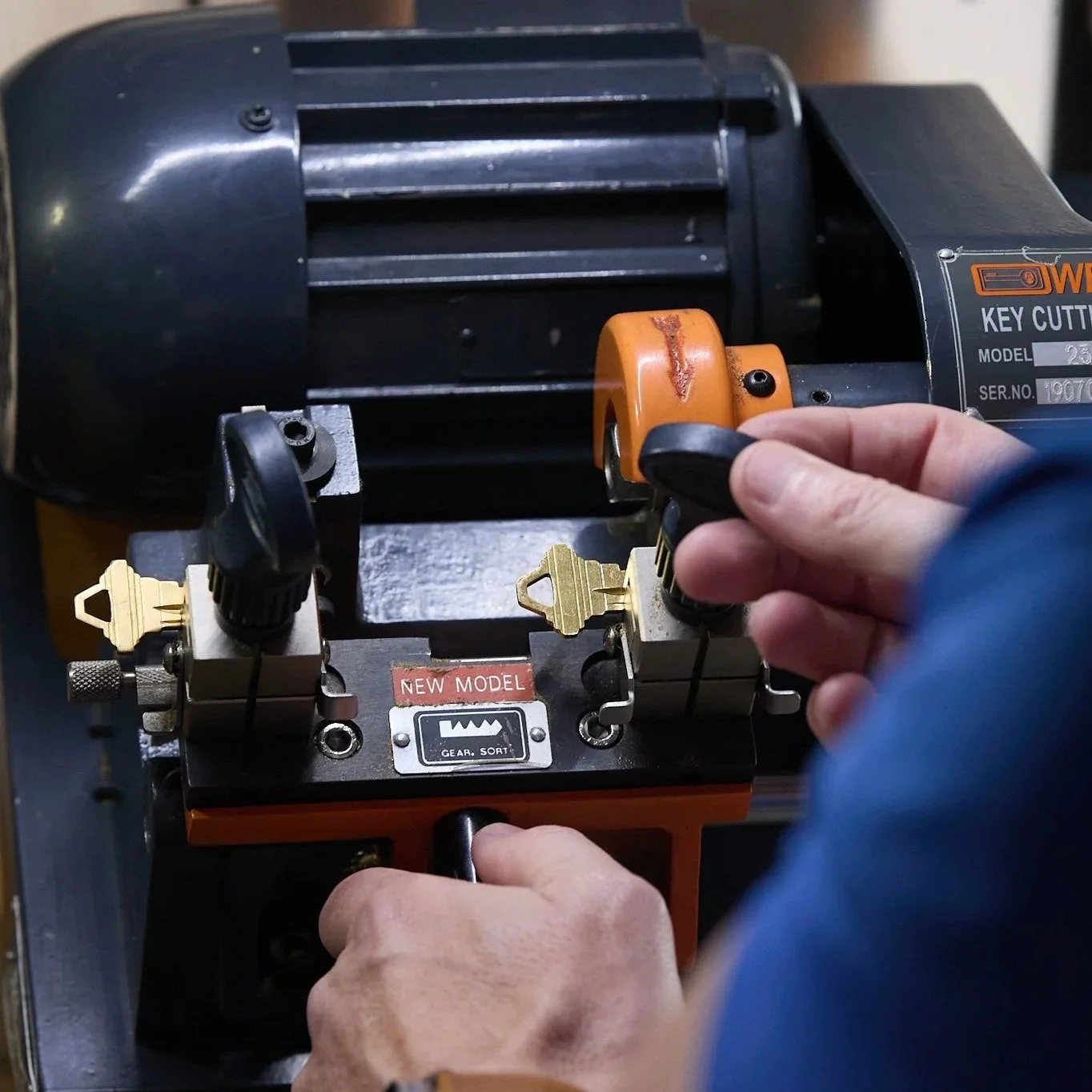
Locksmith cuts replacement keys on a precision key cutting machine, supporting secure access control and reliable mechanical lock performance.
Why Smart Locks Rarely Fail All at Once
Smart locks tend to decline in subtle ways rather than announcing failure outright. Most homeowners notice small changes first. The lock responds a little slower. The motor sounds louder than it used to. Battery alerts appear more often, even with fresh batteries installed. Because the door still locks and unlocks, these changes feel tolerable rather than urgent. Over time, homeowners adjust their habits without realizing reliability has already started to slip. That adjustment phase often masks the moment when replacement would have been the smarter, less disruptive option.
Unlike traditional locks, smart locks combine electronics with mechanical components. That combination creates more potential failure points. A smart lock can appear functional while internal wear, electronic degradation, or compatibility issues quietly reduce reliability. Knowing when those warning signs cross the line from maintenance concerns into replacement territory helps homeowners avoid lockouts, security gaps, and repeated troubleshooting that never fully resolves the issue.
Declining Motor Performance and Increased Resistance
One of the clearest indicators that a smart lock may need replacement involves motor behavior. A healthy smart lock motor operates smoothly and consistently. Over time, homeowners may hear grinding, straining, or uneven movement during locking cycles. These sounds often accompany increased resistance inside the door system. While alignment issues contribute, aging motors lose efficiency and struggle to overcome even minor resistance.
This decline creates a feedback loop. The motor works harder, which increases wear and drains batteries faster. Homeowners may repeatedly correct alignment or replace batteries, only to see the same problems return. When motor strain persists after mechanical adjustments, replacement becomes the more reliable solution. Continuing to rely on a weakening motor increases the risk of partial locks or complete failure at inconvenient times.
Battery Drain That Becomes Constant Rather Than Occasional
All smart locks rely on batteries, and periodic replacement remains normal. What signals trouble is a noticeable change in battery consumption. When fresh batteries last weeks instead of months, something deeper is happening. Increased resistance, failing electronics, or internal corrosion often drive this change. Homeowners sometimes assume battery quality is the issue, cycling through different brands without improvement.
Persistent battery drain affects more than convenience. A lock that loses power unexpectedly may fail to lock fully or respond to commands. Backup access methods exist, but reliance on them indicates declining reliability. When battery drain continues despite proper installation and alignment, replacing the smart lock restores predictable power usage and reduces ongoing maintenance frustration.
Inconsistent Locking and Unlocking Behavior
Consistency forms the backbone of any security system. Smart locks that respond differently at different times signal deeper issues. The lock may work flawlessly during the day and struggle at night. Remote commands may succeed sometimes and fail at other times. Automatic locking features may engage intermittently without a clear pattern.
These inconsistencies often reflect aging sensors, internal communication errors, or marginal mechanical tolerances. Software updates sometimes help, but they cannot correct hardware degradation. When inconsistency becomes a regular experience rather than an occasional glitch, replacement restores predictable behavior. Security depends on trust, and unpredictable smart locks erode that trust quickly.
Loss of Manufacturer Support or Software Updates
Smart locks rely on ongoing software support. Over time, manufacturers discontinue updates for older models. When that happens, security patches stop, compatibility with new devices declines, and app functionality may degrade. A smart lock that still works mechanically may fall behind in its digital capabilities, creating vulnerabilities or usability issues.
Homeowners often overlook this aspect of replacement timing. A lock does not need to be physically broken to become obsolete. Once support ends, the lock effectively freezes in time while the surrounding ecosystem evolves. The replacement brings updated encryption, improved integration, and continued support that protects both security and functionality.
Connectivity Problems That Persist After Troubleshooting
Smart locks rely on connectivity via Bluetooth, Wi-Fi, or hubs. Occasional connection hiccups occur in any system. Persistent connectivity failures after network optimization signal internal issues. Homeowners may reposition routers, add repeaters, or repeatedly reset devices without achieving lasting improvement.
When connectivity problems stem from aging internal components rather than network conditions, replacement offers clarity. A newer lock often features improved antennas, updated protocols, and better integration with modern networks. Continuing to troubleshoot an aging lock wastes time and creates frustration without delivering stability.
Mechanical Wear Inside the Lock Body
Despite their digital nature, smart locks still rely on traditional mechanical components. Bolts, cams, and cylinders wear over time. Increased resistance during manual operation often reveals this wear. A smart lock that struggles even when operated with its mechanical override signals declining internal health.
Mechanical wear often accelerates electronic failure. Motors compensate for resistance until they can no longer do so effectively. When both electronic and mechanical components show signs of strain, replacement addresses the entire system rather than attempting partial fixes that never fully restore performance.
Physical Damage or Environmental Exposure
Smart locks installed on exterior doors face environmental challenges. Moisture, temperature swings, and sunlight degrade seals and internal electronics over time. Corrosion may develop invisibly inside the housing long before external damage appears. Homeowners may notice condensation, discoloration, or stiffness during operation.
Once environmental damage sets in, repairs rarely provide lasting results. Replacement with weather-rated hardware restores reliability and protects against future exposure. Ignoring these signs increases the likelihood of sudden failure during extreme weather conditions.
Security Features That No Longer Meet Current Standards
Security technology evolves quickly. Older smart locks may lack features now considered standard, such as improved encryption, tamper alerts, or refined access logging. While the lock may still function, its security posture may fall short of modern expectations.
Replacement provides an opportunity to upgrade protection rather than merely restore function. Newer models often integrate better with security systems, cameras, and alerts. When homeowners prioritize security over convenience, outdated features justify replacement even if the lock still works.
Frequent Calibration or Reset Requirements
Smart locks occasionally require recalibration, especially after door movement. What raises concern is the frequency of these adjustments. A lock that requires constant recalibration likely sits at the edge of its tolerance range. Door alignment issues contribute, but aging sensors and worn components amplify the problem.
Repeated resets disrupt daily routines and undermine confidence. Replacement introduces hardware designed to operate within broader tolerances and adapt more effectively to real-world conditions. When recalibration becomes routine rather than rare, the system stabilizes.
Backup Access Becoming the Primary Access
Smart locks include backup access methods for emergencies. When homeowners rely on these backups regularly, the smart functionality has effectively failed. Using mechanical keys or manual overrides frequently indicates electronic unreliability.
Backup systems exist for redundancy, not daily use. When the backup becomes the primary method, replacement restores the benefits that prompted smart lock adoption in the first place. Continuing to use a compromised system defeats the purpose of having a smart lock.
Integration Failures With Other Home Systems
Smart locks rarely operate alone. They integrate with alarms, cameras, lighting, and automation routines. When integration repeatedly fails, compatibility issues may be present. Software updates sometimes resolve conflicts, but aging hardware often struggles to keep pace with evolving ecosystems.
The replacement restores seamless integration and reduces the need for workarounds. When smart locks stop communicating reliably with other systems, homeowners lose both convenience and situational awareness. Replacement realigns the lock with the rest of the home’s technology.
False Alerts or Missed Notifications
Reliable alerts build trust. Smart locks that send false alerts or fail to send notifications undermine confidence. Homeowners may ignore alerts altogether after repeated false alarms, thereby missing real security events.
These issues often stem from failing sensors or outdated firmware. Replacement restores accurate monitoring and dependable communication. Security alerts only matter when they accurately reflect reality.
When the Cost of Troubleshooting Exceeds the Replacement Value
Smart lock issues often lead to repeated troubleshooting. Battery replacements, resets, alignment adjustments, and support calls accumulate costs over time. While each fix feels manageable individually, the combined effort often exceeds the value of replacement.
Replacement consolidates these expenses into a single solution that restores reliability. Evaluating cost through a long-term lens helps homeowners recognize when replacement saves time, money, and stress.
Choosing Replacement Timing Proactively
Replacing a smart lock before it fails prevents emergencies. Planned replacement allows homeowners to choose hardware that fits their needs, schedule installation thoughtfully, and test functionality calmly. Waiting until failure forces rushed decisions and higher costs.
Proactive replacement restores confidence rather than reacting to frustration. Watching for early warning signs allows homeowners to act on their terms rather than the lock’s.
What to Consider When Replacing a Smart Lock
Replacement involves more than choosing a new model. Door compatibility, alignment, strike reinforcement, and environment all matter. Installation should address mechanical fundamentals before electronics are introduced. New smart locks perform best when paired with proper preparation.
Considering integration needs, battery management, and backup access during replacement confirms long-term satisfaction. A replacement offers an opportunity to correct previous installation shortcomings and to upgrade security simultaneously.
Smart Lock Lifespan & Replacement FAQs
How long do smart locks typically last?
Lifespan varies based on usage, environment, and installation quality. Most smart locks show declining reliability before complete failure occurs.
Do smart locks fail suddenly or gradually?
Most smart locks fail gradually, showing warning signs such as faster battery drain, unusual motor noise, delayed response, or inconsistent operation.
Can smart lock problems always be fixed with software updates?
Software updates can resolve some issues, but hardware degradation and mechanical wear cannot be fixed and usually require replacement.
Is it safe to keep using a smart lock that works inconsistently?
Inconsistent operation reduces security and reliability. Continuing to use a failing smart lock increases the risk of lockouts or unauthorized access.
Should I replace my smart lock before it stops working completely?
Proactive replacement helps avoid emergencies and allows time to select and install an upgraded system rather than making rushed decisions.
When it comes to professional locksmith services, Locksmiths of Kansas City offers mobile locksmith, safe & specialty locksmith, and security & access solutions for homes and businesses. Our locally-owned, trusted team ensures prompt response, high-quality workmanship, and complete satisfaction. Whether you need emergency lockout support or a full security system upgrade, we deliver dependable, honest service that meets the highest standards. Book your locksmith service today and experience peace of mind knowing your property is secure.
