
Can a Faulty Door Lock Be Fixed or Is It Time to Replace It?
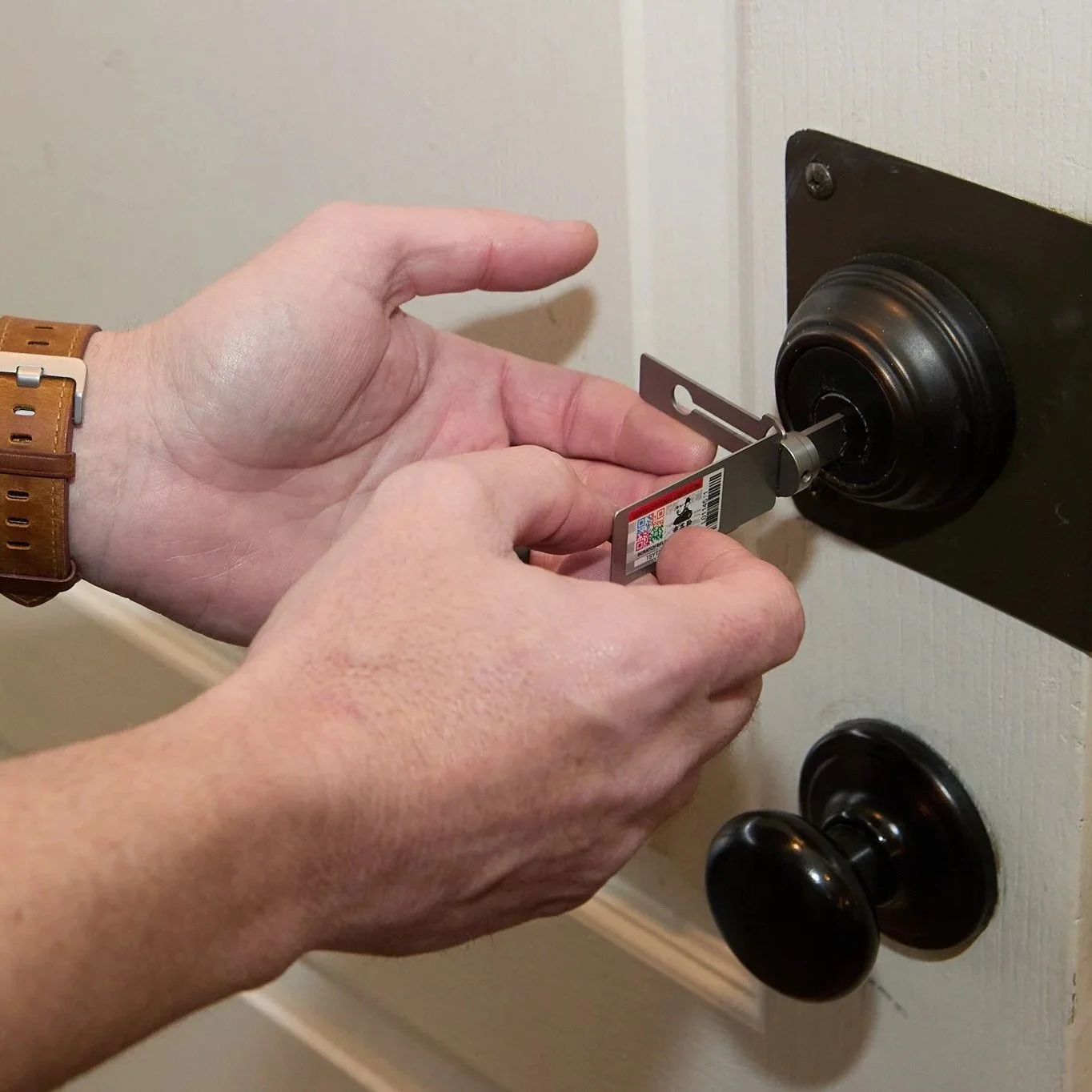
Locksmith tests a door lock cylinder with a key gauge, diagnosing wear and alignment issues to determine repair or replacement needs.
Why Door Lock Problems Rarely Present a Clear Answer
Most homeowners notice a faulty door lock long before they decide to do anything about it. The signs usually start small. A key hesitates during turns, the knob feels loose, or the deadbolt resists full extension unless you pull or push the door just right. None of those issues screams emergency at first, which is why many people live with them for months or even years. A lock still opens and closes, so it feels functional enough. The real challenge lies in understanding whether those early warning signs point to a simple fix or to a system that is already beyond repair.
Door locks operate under constant mechanical stress. Every turn of a key transfers force through internal pins and springs designed to operate within very tight tolerances. Add daily use, seasonal door movement, and occasional misuse, and those tolerances slowly erode. A faulty door lock may work well one moment and fail the next, creating unpredictable behavior that frustrates homeowners. Deciding between repair and replacement requires looking beyond the symptom and understanding what is happening inside the lock and around it.
What Causes Door Locks to Become Faulty Over Time
Wear remains the most common cause of door lock problems. Locks experience thousands of cycles each year, especially on primary entry doors. Pins round off, springs weaken, and internal surfaces accumulate debris, increasing friction. At first, lubrication or cleaning improves performance. Over time, however, metal wear changes internal geometry in ways no amount of maintenance can reverse. The lock still functions, but only under ideal conditions, which rarely exist in real-world use.
Environmental exposure accelerates this process. Exterior locks are exposed to moisture, temperature swings, and airborne dust. In humid conditions, corrosion begins inside the cylinder long before it appears on the surface. Cold weather increases resistance by causing metal to contract, while heat expands components and tightens tolerances. These cycles repeat year after year, slowly degrading performance until the lock becomes unreliable. When environmental factors combine with age, repair options become limited.
When a Faulty Lock Can Be Fixed Effectively
Not every lock issue signals the end of the hardware’s useful life. Some problems stem from external factors rather than internal failure. Loose screws, dry cylinders, or minor strike plate misalignment can be repaired. A locksmith may tighten hardware, adjust the strike, or clean and lubricate internal components to restore smooth operation. Newer locks with minimal wear often benefit from this kind of service, especially when issues arise from door movement rather than internal damage.
Misalignment caused by seasonal movement frequently masquerades as lock failure. A door that swells in humid weather or shifts slightly at the hinges places extra pressure on the latch or deadbolt. Correcting alignment reduces stress on the lock and restores proper function. In those cases, repair addresses the root cause rather than masking symptoms. Fixing a faulty door lock makes sense when the internal components remain structurally sound, and the problem originates outside the lock body.
Signs That Repair Will Only Delay Replacement
Certain symptoms indicate that repair will offer only temporary relief. Inconsistent key operation ranks high among them. When a key works smoothly one moment and binds the next, internal wear often sits beyond the reach of adjustment. Lubrication may improve performance briefly, but the underlying wear remains. Over time, inconsistency worsens, increasing the risk of broken keys or sudden lockouts.
Repeated service calls for the same lock also signal deeper issues. If a lock requires adjustment every few months, something fundamental has changed in its structure. Repairs address individual symptoms but cannot rebuild worn metal or restore lost tolerances. Homeowners often spend more on repeated repairs than on replacement, all while dealing with ongoing inconvenience. At that stage, replacement becomes the more predictable and cost-effective solution.
Internal Damage You Cannot See From the Outside
Many homeowners judge the condition of a lock by appearance alone. A lock may look fine on the outside while hiding significant internal damage. Pins can bend, springs can collapse, and chambers can deform due to years of stress or a single forceful incident. Broken keys inside locks often reveal these hidden issues. Even if a locksmith removes the broken fragment, internal damage frequently remains.
Locks that have endured forced entry attempts often fall into this category. Even unsuccessful attempts can compromise internal alignment. A lock may continue to function afterward, but internal parts now operate under abnormal stress. Repair may restore partial function, yet reliability suffers. Replacement removes compromised components entirely, eliminating hidden weaknesses that repairs cannot fully address.
Security Considerations in the Repair vs. Replacement Decision
Functionality represents only part of the equation. Security matters just as much. Older locks may function perfectly after repair, yet still fall short of modern security standards. Many legacy designs lack hardened components or reinforced strike compatibility. Repair keeps them working, but does not improve their resistance to forced entry or manipulation.
Replacing a faulty lock offers an opportunity to upgrade security rather than merely restore operation. Newer hardware incorporates design improvements that better resist common attack methods. For homeowners concerned about break-ins or property protection, replacement delivers benefits beyond mechanical reliability. Repair restores function, but replacement strengthens defense.
How Door And Frame Conditions Influence the Decision
Locks reflect the condition of the door and frame surrounding them. A door that no longer sits square in its frame forces the lock to compensate during every cycle. That compensation accelerates wear and creates resistance that repairs struggle to overcome. Adjusting the strike plate may help temporarily, but ongoing movement continues to stress internal components.
Replacing the lock, combined with proper alignment, often yields better results. New hardware sometimes tolerates slight misalignment more effectively, especially when installed with adjustment in mind. Repairing an older lock on a moving door often leads to recurring problems. A replacement allows the system to reset to current conditions rather than fight them.
Cost Considerations Beyond the Initial Service Call
Repair appeals to homeowners because it usually costs less upfront. A service visit to adjust or clean a lock is more economical than buying new hardware. Over time, however, repeated repairs accumulate costs while delivering diminishing returns. Emergency calls, broken keys, and lockouts add indirect expenses that rarely appear on the first invoice.
Replacement consolidates those expenses into a single investment. New locks require less maintenance and deliver predictable performance. Homeowners who evaluate the total cost of ownership rather than the immediate expense often find replacement to be the more economical option once a lock shows recurring issues. Reliability carries value that extends beyond the price of the hardware itself.
Key Control and Peace of Mind
Faulty locks often coincide with worn keys and unclear key control. Keys wear down, creating additional stress inside the cylinder. Spare keys circulate over time, and homeowners lose track of who has access to them. Repairing the lock does nothing to address those concerns.
Replacement introduces new keys and resets access control. That clean slate matters after moves, renovations, or lost key incidents. Rekeying sometimes achieves the same goal, but replacement makes more sense when the lock already shows signs of wear or damage. Peace of mind factors into the decision just as much as mechanical condition.
Weather Exposure as a Replacement Trigger
Exterior locks endure harsher conditions than interior hardware. Moisture, dust, and temperature swings accelerate wear. Corrosion often develops inside the lock long before it appears externally. Once corrosion begins, internal components degrade unevenly, leading to unpredictable operation.
Repair may slow the process, but it rarely stops it entirely. Replacement removes corroded components and replaces them with materials better suited to exterior exposure. When weather-related damage contributes to faulty operation, replacement offers a longer-lasting solution that repair struggles to match.
Smart Locks and Compatibility Concerns
Modern upgrades complicate the decision between repair and replacement. Older locks may function adequately but lack compatibility with smart access systems or reinforced doors. Repair keeps outdated hardware working, but does not integrate with newer security features.
Replacement allows seamless integration with modern doors and technology. New locks accommodate updated dimensions, reinforced frames, and electronic systems more effectively. As homes evolve, locks must evolve with them, making replacement the practical choice in many upgrade scenarios.
When Repair Still Makes Sense
Despite many advantages of replacement, repair retains its place. Newer locks with minimal wear often respond well to professional adjustment and maintenance. Issues caused by misalignment, loose hardware, or dry cylinders do not automatically require replacement. Repair preserves hardware life when internal components remain structurally sound.
The key lies in accurate diagnosis. Understanding whether the problem stems from wear, damage, or external factors guides the decision. Repair succeeds when it addresses root causes rather than masking symptoms.
Lock Repair vs Replacement FAQs
Can a locksmith tell if my lock needs repair or replacement?
A professional assessment evaluates internal wear, alignment, and security limitations to determine whether repair restores reliability or replacement offers better long-term results.
Is it cheaper to repair a faulty door lock?
Repair often costs less initially, but repeated repairs can exceed the cost of replacement over time due to ongoing service needs and inconvenience.
Does replacing a lock improve home security?
Replacement often improves security by introducing modern hardware features and eliminating weaknesses caused by wear or outdated designs.
What happens if I keep using a faulty lock?
Continued use increases wear, raises the risk of broken keys or lockouts, and may compromise security as internal components continue to degrade.
Can I replace just one lock, or should I replace them all?
Replacing one lock works when issues are isolated. Some homeowners choose broader replacement to simplify key control and maintain consistent security.
For professional residential locksmith, commercial locksmith, and automotive locksmith solutions, contact Locksmiths of Kansas City. We handle lock repairs, key duplication, security upgrades, and emergency lockout assistance. Our locally-owned and certified team works on homes, offices, and vehicles with attention to speedy service, dependable results, and long-lasting safety. Enjoy trusted local expertise with no hidden fees. Schedule your locksmith service now and enjoy quick, reliable solutions anytime.
