
Key Fob Programming Basics Most Drivers Never Hear About
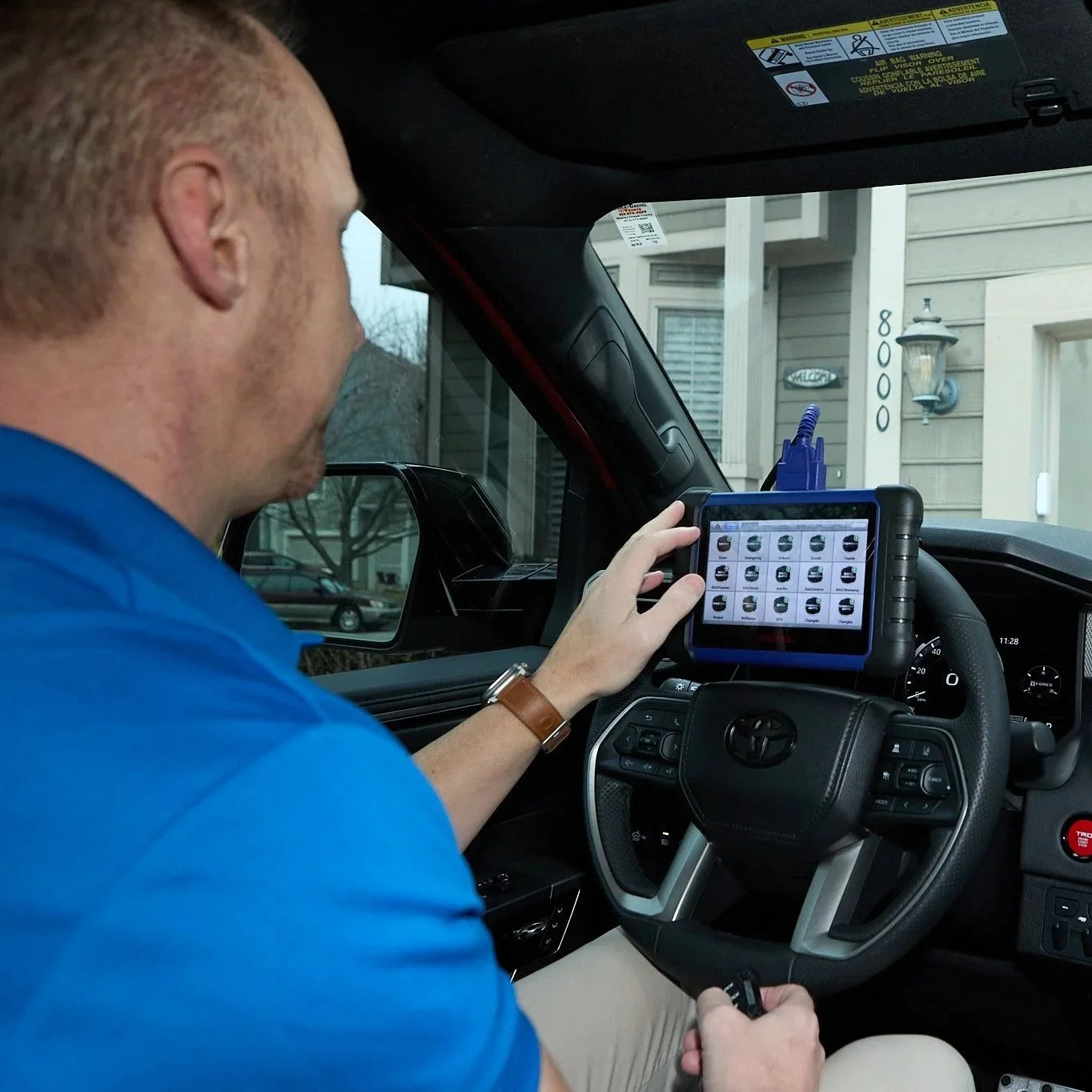
Technician programs a vehicle key fob using diagnostic equipment, demonstrating secure authorization and electronic access control inside a modern car.
Why Key Fob Programming Is More Than Pressing Buttons
Most drivers assume key fob programming is a simple pairing step, something like syncing headphones or connecting a phone to Bluetooth. That assumption creates confusion when replacement or duplication becomes a longer process. Key fob programming is not about convenience pairing. It is about security authorization. The vehicle is deciding whether it trusts the fob enough to allow unlocking, starting, and in some cases disabling alarms or immobilizers.
Modern vehicles treat key fobs as digital credentials. Programming introduces that credential into the vehicle's security system, not just its comfort features. This is why programming steps feel strict and vehicle-specific. The process is intentionally controlled because allowing casual pairing would undermine theft protection. Most drivers never hear this explanation, which is why programming feels unexpectedly complicated when the need arises.
Why Vehicles Care About Identity, Not Just Signals
A key fob does not just send a generic signal like a garage door opener. It sends an identity. That identity includes encrypted information that the vehicle checks against its internal memory. If the identity matches, the vehicle responds. If it does not, nothing happens, regardless of how close the fob is or how many times the buttons are pressed.
Programming adds that identity to the vehicle's trusted list. Without it, the vehicle treats the fob as unknown. This is why copying a fob shell, swapping batteries, or buying a lookalike replacement never works on its own. The vehicle does not care what the fob looks like. It cares whether it recognizes the electronic signature.
Why Some Cars Allow Self-Programming and Others Do Not
Drivers often hear stories about programming a key fob at home using a sequence of door locks, ignition cycles, or button presses. Those stories are sometimes true, but only for specific vehicles and specific situations. Self-programming usually works only when at least one working fob already exists. That working fob proves the system's authorization.
When no authorized fob is present, the vehicle switches to a higher security posture. At that point, self-programming disappears as an option. The system requires diagnostic-level access to prevent unauthorized pairing. This distinction explains why some drivers succeed with simple steps while others hit a wall even when following the exact instructions.
Why Having One Working Fob Changes Everything
One working fob acts as a security passport. It tells the vehicle that the person attempting to add another fob already has legitimate access. This allows the system to open limited programming modes without exposing deeper security layers.
When all fobs are lost or non-functional, the vehicle has no reason to trust the situation. Programming then requires secure system access to intentionally rebuild authorization. This difference is rarely explained to drivers until they are already stuck, which makes the process feel arbitrary rather than designed.
Rolling Codes Are Why Cloning Does Not Work
Many modern key fobs use rolling codes. Each time the fob communicates with the vehicle, the code changes. The vehicle and fob stay synchronized through an algorithm that prevents replay attacks. Even if someone captures a signal, it becomes useless after a single use.
Programming aligns the new fob with this rolling code system. Copying alone cannot do that. This is why attempts to clone fobs using generic tools fail or work only briefly. The system detects an inconsistency and rejects the device.
Why Used Key Fobs Often Cannot Be Reprogrammed
Used key fobs seem like an easy solution, but many are permanently locked to their original vehicle. The internal chip stores a unique relationship that cannot always be cleared. Even when a used fob looks identical, its internal identity may be incompatible.
Programming fails not because of a technician error, but because the fob itself cannot reset its authorization state. This detail rarely gets mentioned in online listings, which is why drivers waste time and money trying to reuse hardware that was never designed for reassignment.
Programming Also Decides Which Fobs Stop Working
One of the least-discussed aspects of key fob programming is removal, not addition. During programming, many vehicles allow the system to clear old fobs from memory. This means that lost or stolen fobs no longer work, even if they are found later.
This matters more than most drivers realize. Without proper programming, lost fobs remain active indefinitely. Programming restores control by defining exactly which fobs the vehicle trusts. Copying alone cannot offer this cleanup.
Why Timing And Sequence Matter During Programming
Key fob programming often follows strict timing rules. Doors must open or close within seconds. Ignition cycles must happen in precise order. These steps are not arbitrary. They prevent accidental or malicious entry into programming modes.
Missing a step or mistiming a sequence cancels the process. Drivers attempting DIY programming often assume they did something wrong, unaware that the system is intentionally unforgiving. Precision protects security.
Why Online Instructions Are Often Incomplete
Online programming guides often apply to a single trim level, a single production year, or a single market variation. Manufacturers change procedures quietly across model years. What works for one version may fail for another.
Drivers following generic instructions often encounter failure without understanding why. This creates the impression that the vehicle is broken, when the real issue is a mismatch between the procedure and the system design.
Programming Is Not Just About Starting The Car
Key fob programming also affects alarm behavior, door lock logic, trunk access, remote start, and proximity features. Partial programming can leave some features working and others non-functional.
A properly programmed fob integrates fully. Everything responds as expected. Anything less signals incomplete or incorrect programming. This is why testing all functions matters after replacement.
Why Programming Problems Can Trigger Warning Lights
Incorrect programming attempts sometimes confuse vehicle modules. When expected signals do not arrive in the correct sequence, the system may log faults or temporarily turn off features. These issues usually resolve once correct programming is completed, but repeated failed attempts can extend lockout periods.
This behavior is another reason vehicles discourage trial-and-error approaches. The system prioritizes security and stability over convenience.
Why Professional Tools Exist For A Reason
Professional programming tools communicate directly with vehicle security modules. They follow manufacturer-approved paths rather than forcing entry into programming modes. This reduces errors and prevents unnecessary lockouts.
These tools also confirm success. The technician can verify that the fob is recognized, active, and properly integrated. Guesswork disappears. Reliability increases.
Why Programming Costs What It Does
Programming costs reflect security, not inconvenience. Equipment, training, and time are all support systems designed to prevent theft. If programming were cheap and straightforward, vehicles would be easier to steal.
Understanding this reframes cost as protection rather than a penalty. Programming restores access while preserving security integrity.
Why Waiting Rarely Improves Fob Issues
When fobs behave inconsistently, programming issues or electronic degradation usually worsen over time. Waiting does not stabilize failing electronics. It increases the chance of complete failure at inconvenient moments.
Addressing issues early keeps options open. Having at least one functioning fob simplifies future programming and replacement.
What Drivers Benefit From Knowing Ahead Of Time
Knowing these basics changes how drivers respond to fob issues. Instead of assuming the vehicle is malfunctioning, they recognize the fob as the weak link. Instead of wasting money on incompatible replacements, they seek proper solutions sooner.
Key fob programming feels complicated only when it is misunderstood. Once the security logic becomes clear, the process makes sense.
Key Fob Programming FAQs
Why does my key fob unlock the door but not start the car?
Unlocking and starting use different authorization layers. The fob may unlock doors but not be fully programmed to communicate with the vehicle’s immobilizer system.
Can key fob programming be done without any working fobs?
Yes, but it requires deeper system access using professional tools and cannot usually be completed through simple onboard programming steps.
Why won’t a used key fob program work for my car?
Many used key fobs are permanently linked to their original vehicle and cannot have their internal authorization reset for another car.
Does programming remove old or lost key fobs?
In many vehicles, proper programming removes old fobs from the system memory so they can no longer unlock or start the vehicle.
Why does programming fail when I follow online instructions?
Online instructions often apply only to specific models or production years. Small system differences can prevent success even when steps appear correct.
For professional residential locksmith, commercial locksmith, and automotive locksmith solutions, contact Locksmiths of Kansas City. We handle lock repairs, key duplication, security upgrades, and emergency lockout assistance. Our locally-owned and certified team works on homes, offices, and vehicles with attention to speedy service, dependable results, and long-lasting safety. Enjoy trusted local expertise with no hidden fees. Schedule your locksmith service now and enjoy quick, reliable solutions anytime.
