
Deadbolt Installation Basics Every Homeowner Should Understand
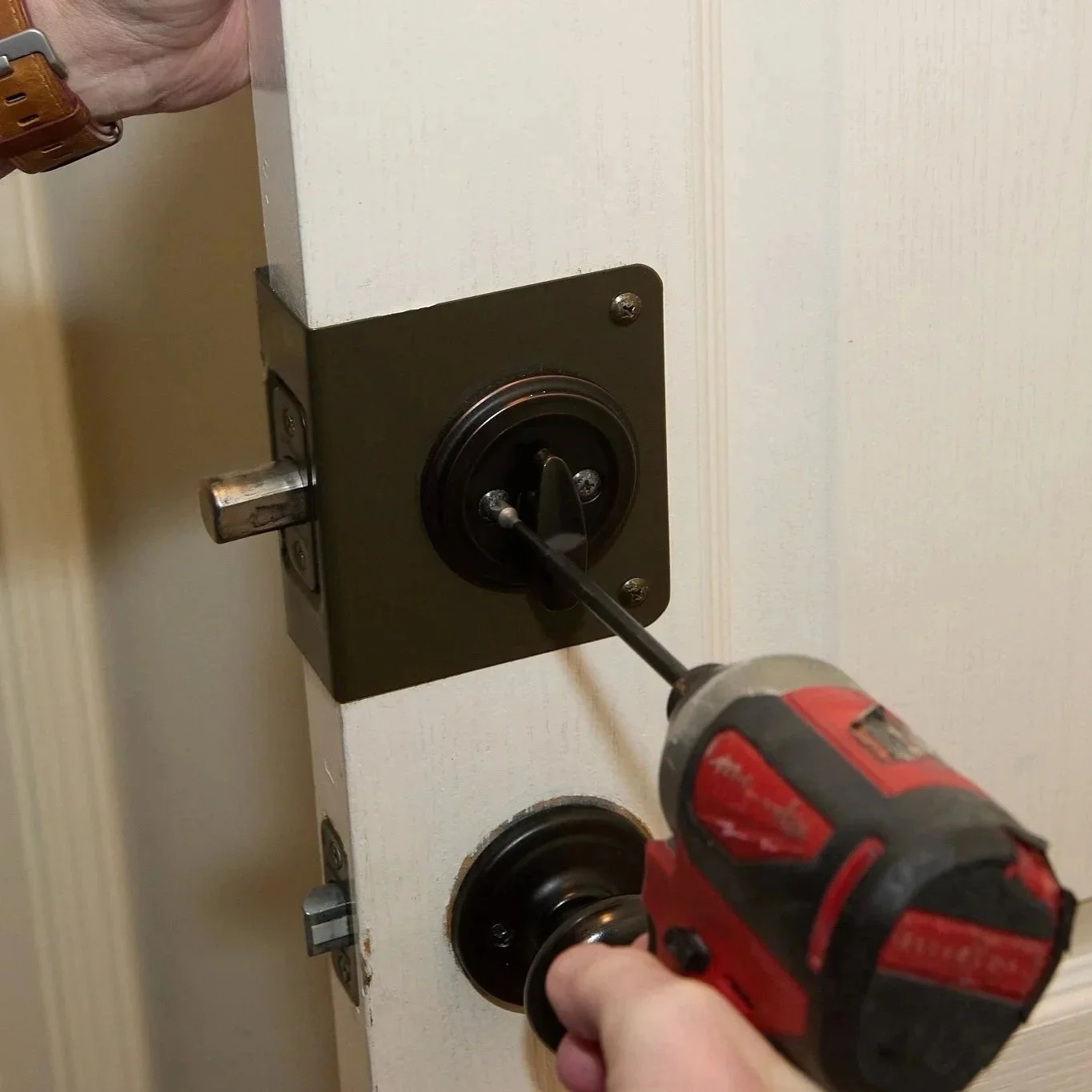
Unlike spring latches, deadbolts do not rely on angled mechanisms that can be slipped or forced back easily.
Why Deadbolts Matter More Than Most People Realize
Deadbolts often get treated as simple hardware upgrades, yet they play a central role in how a door actually protects a home. A deadbolt does not just add another lock above a knob. It changes how force transfers through the door, frame, and surrounding structure. Unlike spring latches, deadbolts do not rely on angled mechanisms that can be slipped or forced back easily. When installed correctly, they create a solid barrier that resists direct pressure and tampering far better than basic latch hardware.
Many homeowners assume that installing any deadbolt automatically improves security. The reality depends heavily on how the deadbolt is installed and how it interacts with the door and frame. A poorly installed deadbolt may function day to day yet fail under stress or wear out prematurely. Understanding the basics behind proper deadbolt installation helps homeowners avoid common mistakes that undermine both security and long-term reliability.
Single Cylinder Versus Double Cylinder Deadbolts
One of the first decisions homeowners face is choosing between single-cylinder and double-cylinder deadbolts. A single cylinder deadbolt uses a key on the exterior and a thumbturn on the interior. This design prioritizes quick exit and convenience, especially during emergencies. Most residential homes use single-cylinder deadbolts because they balance security with safety.
Double cylinder deadbolts require a key on both sides of the door. These are sometimes chosen for doors with nearby glass panels, where a thumbturn could be reached by breaking glass. While they offer added resistance in those scenarios, they introduce safety considerations. Requiring a key to exit can slow evacuation during emergencies. Local codes and practical use cases often determine whether double-cylinder deadbolts make sense. Homeowners should understand how their specific door layout and safety needs affect this choice rather than assuming one option fits all situations.
Door And Frame Condition Before Installation
Deadbolt performance depends as much on the door and frame as on the lock itself. A solid deadbolt installed in a weak or misaligned door frame cannot perform as intended. Over time, doors settle, hinges loosen, and frames shift. These changes affect how the deadbolt lines up with the strike plate and how smoothly it extends and retracts.
Before installation, homeowners should evaluate door thickness, material, and alignment. A door that rubs at the top or requires pressure to close already places stress on locking hardware. Installing a deadbolt without addressing alignment issues forces the lock to compensate for structural movement. That compensation shows up as stiff operation, uneven wear, and eventual failure. Proper preparation often involves hinge adjustment or strike repositioning before drilling or mounting new hardware.
Understanding Backset And Bore Measurements
Deadbolt installation requires precise measurements, especially regarding backset and bore placement. Backset refers to the distance from the edge of the door to the center of the lock bore. Common residential backsets include two and three-eighths inches and two and three-quarters inches. Installing a deadbolt with the wrong backset results in an awkward key position and misalignment with the strike plate.
Bore size matters just as much. Deadbolts require specific hole diameters to seat correctly and operate smoothly. Improperly enlarged holes weaken the door, while undersized holes force hardware into place and stress components. Measuring carefully before drilling prevents structural compromise and ensures the deadbolt functions as designed. Homeowners often underestimate the tolerance in these measurements, which explains why rushed installations lead to long-term issues.
Strike Plate Placement And Reinforcement
The strike plate anchors the deadbolt into the frame, making it one of the most critical yet overlooked components of installation. A deadbolt is only as strong as the material holding the strike plate in place. Many doors come with strike plates secured to the trim rather than to the structural framing. That setup allows the frame to split under force even if the deadbolt itself remains intact.
Proper installation involves positioning the strike plate so the deadbolt extends fully into the frame and securing it with long screws that reach solid framing. Reinforcement distributes force across a wider area, dramatically improving resistance to forced entry. Homeowners often focus on the lock cylinder and ignore the strike, yet the strike determines how well the system withstands stress.
Deadbolt Alignment And Smooth Operation
Alignment affects both security and usability. A deadbolt should extend and retract smoothly without requiring pressure on the door. When alignment is off, homeowners often develop habits like lifting the door or pushing hard while locking. Those habits mask underlying issues and accelerate wear inside the lock.
Correct alignment allows the deadbolt to engage fully with minimal resistance. This reduces stress on internal components and preserves key integrity. Over time, proper alignment extends hardware life and maintains consistent performance. Homeowners who prioritize smooth operation during installation avoid the gradual frustration that builds when small misalignments go unaddressed.
Single Deadbolt Versus Multiple Locking Points
Some homeowners consider installing multiple deadbolts on a single door for added security. While additional locking points can increase resistance, they also introduce complexity. Multiple deadbolts require precise alignment with the frame and with each other. If the door moves seasonally, maintaining alignment becomes more challenging.
In many cases, a single high-quality deadbolt installed correctly and reinforced provides sufficient security. Adding complexity without addressing foundational issues often creates more problems than it solves. Understanding how much security a properly installed deadbolt already provides helps homeowners make balanced decisions rather than assuming more hardware always equals better protection.
Weather And Seasonal Movement Considerations
Exterior doors experience seasonal movement due to changes in temperature and humidity. Wood doors swell and shrink, while frames shift slightly. Deadbolt installation should account for these changes. Installing a deadbolt during one season without considering future movement can lead to binding or misalignment months later.
Professional installers often allow a slight tolerance in strike placement to accommodate movement. They also choose appropriate lubricants and materials that resist temperature-related stiffness. Homeowners who understand seasonal behavior avoid assuming that a stiff deadbolt indicates poor hardware when the real issue is environmental changes that were not considered during installation.
Deadbolt Height And Placement On The Door
Deadbolt height affects both security and usability. Installing a deadbolt too close to the door edge or too near existing hardware weakens the door structure. Placement should balance ergonomics with structural integrity. Most deadbolts sit several inches above the knob to distribute force effectively and avoid splitting the door.
Height also affects leverage during forced entry attempts. Proper placement aligns the deadbolt with stronger sections of the door and frame. Homeowners often rely on visual preference rather than structural considerations when choosing placement. Understanding how placement affects performance leads to better long-term outcomes.
Keyway Orientation And Usability
Keyway orientation influences how keys insert and turn. Installing the cylinder upside down or at an awkward angle may not prevent operation, but it affects usability and wear. Proper orientation allows keys to enter smoothly and reduces twisting forces during rotation.
Consistent orientation across doors also simplifies key use. Homeowners juggling multiple locks benefit from predictable key positioning. Small details like this contribute to daily convenience and reduce unnecessary stress on keys and cylinders.
DIY Versus Professional Installation Realities
Many homeowners successfully install deadbolts themselves, especially when doors and frames are in good condition. Challenges arise when alignment issues, non-standard doors, or structural concerns exist. DIY installations often focus on making the hardware fit rather than making the system perform optimally.
Professional installation brings experience in diagnosing underlying issues before hardware goes on the door. That experience prevents future problems that DIY approaches may not anticipate. Homeowners benefit from understanding when installation remains straightforward and when complexity justifies professional help.
Maintenance After Installation
Deadbolt installation does not end once the lock turns for the first time. Periodic maintenance preserves performance. Lubrication, screw tightening, and alignment checks prevent small issues from escalating. Many homeowners neglect maintenance, assuming locks need no attention until they fail.
Regular inspection helps identify changes caused by seasonal movement or wear. Addressing those changes early keeps the deadbolt functioning smoothly and securely. Maintenance reinforces the value of a properly installed system rather than allowing gradual degradation to undo good installation work.
Common Installation Mistakes To Avoid
Rushing measurements, reusing short screws, ignoring alignment, and copying existing flaws all undermine deadbolt performance. Installing a deadbolt in a door that already struggles to close compounds the problem. Over-tightening screws can warp hardware and bind internal components.
Avoiding these mistakes requires patience and attention to detail. Homeowners who approach installation thoughtfully achieve better results than those who treat it as a quick task. Understanding why each step matters reduces the temptation to cut corners.
Long-Term Security Depends On Installation Quality
Deadbolts provide security through mechanical integrity and proper integration with the door system. Poorly installed, quality hardware delivers disappointing results. Average hardware installed well often performs better over time.
Homeowners who understand the basics of deadbolt installation make informed decisions that protect both their property and their investment. Security improves not through complexity, but through the correct execution of foundational principles.
FAQs
Do I need a deadbolt on every door?
Exterior doors benefit from deadbolts because they offer stronger resistance than latches alone, especially when properly reinforced.
Can I install a deadbolt on an older door?
Older doors can accept deadbolts, though alignment, thickness, and structural condition should be evaluated to support proper installation.
Why does my deadbolt feel stiff after installation?
A stiff operation often indicates misalignment between the deadbolt and strike plate, or door movement that was not corrected during installation.
Are longer screws really necessary for strike plates?
Long screws anchor the strike plate into structural framing, significantly improving resistance to forced entry compared with short trim-mounted screws.
How often should a deadbolt be maintained?
Periodic inspection and lubrication help preserve smooth operation, especially during seasonal changes that affect door alignment.
Locksmiths of Kansas City offers full-service residential locksmith, commercial locksmith, and automotive locksmith solutions, including lock installation, business security enhancements, car key programming, and emergency lockout support. Our experienced and locally-owned team works on homes, offices, and vehicles with an emphasis on speed, reliability, and long-term security. From Emergency locksmith services to a complete security system upgrade, we provide 100% satisfaction guarantee and professional workmanship. Call today to schedule your locksmith service and enjoy worry-free protection.
