
Key Card Access Systems and How They Improve Security
Businesses rarely outgrow traditional keys all at once. The shift usually happens after a series of small frustrations that reveal how little control physical keys actually provide. An employee forgets to return a key. A vendor needs temporary access and suddenly gets permanent access. A lost key forces an uncomfortable decision between rekeying the building or accepting an unknown risk. Over time, those moments add up and expose the limits of key-based security. Key card access systems emerge as a practical response to those realities rather than a flashy upgrade.
Key card access systems improve security by changing how access is granted, tracked, and revoked. Instead of relying on static hardware decisions made years ago, businesses can manage entry dynamically. Cards can be issued, limited, disabled, or reassigned without touching the locks themselves. That shift replaces uncertainty with visibility and replaces assumptions with control. Understanding how these systems improve security starts with understanding the problems they solve in real operating environments.
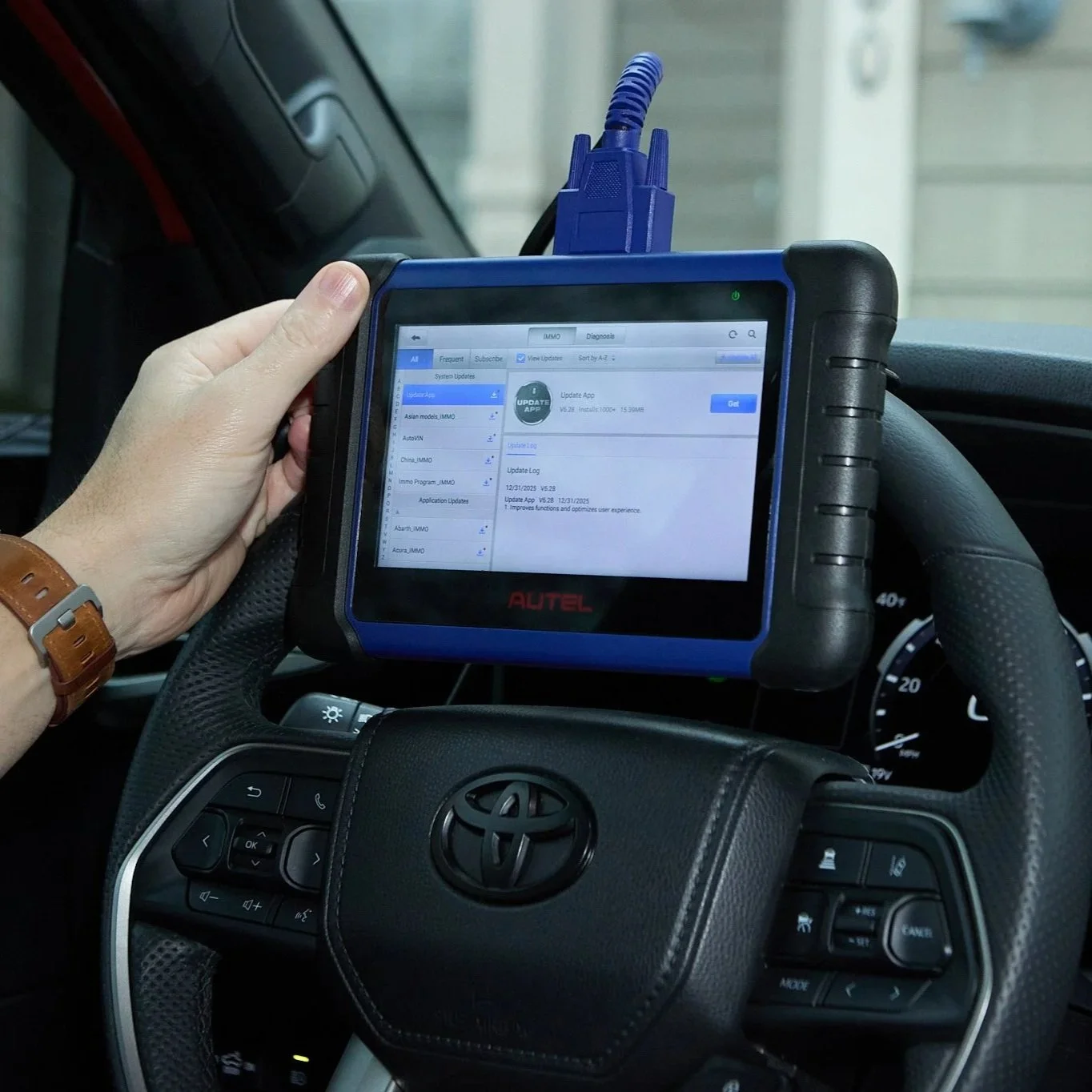
Technician programs a key card access system inside a vehicle, highlighting modern electronic credential management replacing traditional physical keys.
Why Traditional Keys Create Long-Term Security Gaps
Physical keys feel simple and familiar, which makes their weaknesses easy to overlook. Once a key is issued, control over it becomes theoretical rather than practical. Copies can be made quietly. Keys can be shared casually. Retrieval depends on cooperation rather than enforcement. Over time, businesses lose track of how many keys exist and who still has them.
Those gaps widen as organizations grow. More employees mean more keys. Master key systems help, but they introduce risks when keys circulate beyond their intended scope. One misplaced master key can expose multiple areas at once. Even diligent policies struggle to keep pace with staff turnover and changing responsibilities.
Key card access systems address these gaps by replacing uncontrolled physical objects with managed credentials. Cards exist within a system that consistently recognizes and enforces rules. When access ends, the credential stops working. That fundamental difference transforms how businesses think about security from static ownership to active management.
How Key Card Access Systems Work In Practice
At their core, key card access systems rely on electronic credentials linked to readers installed at doors. When a card is presented, the system checks whether that credential has permission to unlock that door at that time. If authorized, access is granted. If not, the door remains secure. While the mechanics happen quickly, the implications are significant.
Permissions live in software rather than metal. Administrators assign access levels based on roles rather than distributing different keys. Changes happen instantly without replacing hardware. That flexibility allows businesses to respond to real-world situations rather than planning around the limitations of physical locks.
Modern systems support various credential types, including magnetic stripe, proximity, and smart cards. Each option offers different levels of security and durability. Choosing the right one depends on environment, risk tolerance, and operational needs rather than a one-size-fits-all approach.
Improving Security Through Controlled Credential Issuance
One of the strongest security improvements offered by key card access systems lies in controlled credential issuance. Cards do not exist outside the system. Each one is created intentionally, assigned to a person, and logged. That accountability discourages casual sharing and makes misuse easier to trace.
When employees know access is tracked, behavior aligns more closely with policy. Restricted areas remain restricted because credentials automatically enforce boundaries. Even without active monitoring, the knowledge that access is logged changes how people interact with secured spaces.
Controlled issuance also simplifies onboarding. New hires receive credentials tailored to their role rather than generic keys. Access expands or contracts as responsibilities change. That precision reduces unnecessary exposure while supporting efficient operations.
Immediate Revocation And Rapid Response To Risk
Lost keys create immediate uncertainty because they cannot be remotely disabled. Owners must decide whether to rekey locks or accept unknown risk. That decision often favors inaction due to cost or disruption, leaving vulnerabilities unresolved.
Key card access systems eliminate that dilemma. When a card goes missing, administrators deactivate it immediately. The lost card becomes useless without affecting other users. That speed transforms security response from reactive to proactive.
Rapid revocation also matters during employee departures. Access ends the moment employment ends, rather than relying on key returns. Businesses close doors cleanly and decisively without waiting for physical handoffs or scheduling locksmith visits.
Granular Access Control That Matches Real Roles
Traditional keys struggle to reflect the complexity of modern workplaces. A single key often opens more doors than intended, while issuing multiple keys creates clutter and confusion. Key card access systems excel at granular control.
Permissions can vary by door, time, and role. An employee may access certain areas only during business hours. Managers may enter sensitive areas at any time. Vendors might receive limited access for specific windows. These distinctions exist naturally within the system rather than through improvised rules.
That granularity strengthens security by aligning access with actual responsibility. Fewer people enter areas they do not need to access. Boundaries become clearer, and exceptions become intentional rather than accidental.
Audit Trails And Visibility Into Access Activity
One of the most overlooked benefits of key card access systems involves visibility. Traditional keys leave no record. When questions arise, businesses rely on memory, assumptions, or incomplete logs. Key card systems automatically record access events.
Audit trails show who entered which door and when. That information proves invaluable during investigations, disputes, or compliance reviews. Even when nothing goes wrong, visibility supports accountability and informed decision-making.
Accessing data also helps identify patterns. Businesses may notice doors used outside expected hours or areas accessed more frequently than anticipated. These insights allow proactive adjustments rather than reactive fixes.
Reducing Internal And External Security Threats
Security threats do not always come from outside. Internal misuse, curiosity, or policy violations often pose greater risk. Key card access systems reduce both internal and external threats by enforcing consistent rules.
Externally, visible card readers signal controlled access, discouraging casual intrusion. Internally, employees encounter clear boundaries reinforced by the system rather than relying solely on judgment. That consistency removes ambiguity that can lead to misuse.
When incidents occur, access records help quickly narrow responsibility. That clarity reduces disruption and prevents broad suspicion from affecting morale or operations.
Supporting Compliance And Risk Management
Many industries face regulatory expectations around access control and documentation. Healthcare, finance, education, and data-driven businesses often require proof of restricted access. Key card access systems support compliance by design.
Documentation exists automatically. Permissions demonstrate intent. Audit trails provide evidence. Businesses avoid scrambling to reconstruct access history after the fact. That preparedness reduces legal exposure and supports insurance requirements.
Risk management improves as well. Access reviews become data-driven rather than speculative. Businesses can identify unnecessary permissions and proactively tighten controls, rather than waiting for problems to surface.
Scalability And Long-Term Adaptability
Security systems should grow with the business rather than limit it. Traditional keys struggle with scale. Each new hire, department, or location adds complexity. Key card access systems scale naturally through software rather than hardware replacement.
Adding users involves issuing credentials rather than cutting keys. New doors integrate into existing systems. Locations connect under centralized management. Growth no longer forces repeated security overhauls.
That adaptability reduces long-term costs and planning fatigue. Businesses invest once and adjust continuously rather than restarting with each expansion.
Reliability And Integration With Mechanical Security
Key card access systems do not eliminate mechanical locks. They control them electronically. Quality systems balance electronic management with mechanical reliability. Doors remain secure during outages through configured fail-safe or fail-secure modes.
Battery backups, local controllers, and emergency overrides protect access during disruptions. Businesses choose configurations that match safety and security priorities rather than relying on a single failure point.
Integration with cameras, alarms, and monitoring platforms further strengthens security. Access data complements other systems, creating context rather than isolated alerts.
Addressing Common Concerns About Key Card Systems
Some business owners worry about complexity. Modern systems focus on usability, offering intuitive interfaces and manageable learning curves. Others worry about reliability. Commercial-grade systems function independently of constant network connectivity and include redundancy.
Concerns about card sharing arise frequently. While sharing can occur, tracking and revocation reduce impact compared to physical keys. Policies backed by system enforcement prove far more effective than trust alone.
Cost concerns often fade when businesses consider reduced rekeying, improved accountability, and lower risk. Key card access systems represent infrastructure rather than expense when viewed long-term.
Key Card Access System FAQs for Businesses
How do key card access systems improve security compared to keys?
Key card access systems improve security by allowing controlled issuance, immediate revocation, and detailed access tracking, eliminating many risks associated with lost or copied keys.
What happens if a key card is lost or stolen?
Lost or stolen cards can be deactivated instantly, preventing unauthorized access without changing locks or affecting other users.
Can key card access systems work for small businesses?
Key card systems suit businesses of all sizes, especially those with employee turnover or restricted areas. Systems scale based on operational needs rather than business size.
Do key card systems require internet access to function?
Most systems operate locally and continue functioning during internet outages, securely storing access data until connectivity is restored.
Are key card access systems difficult to maintain?
Maintenance is minimal. Systems require occasional updates and hardware checks, but daily management remains straightforward for most businesses.
When it comes to professional locksmith services, Locksmiths of Kansas City offers mobile locksmith, safe & specialty locksmith, and security & access solutions for homes and businesses. Our locally-owned, trusted team ensures prompt response, high-quality workmanship, and complete satisfaction. Whether you need emergency lockout support or a full security system upgrade, we deliver dependable, honest service that meets the highest standards. Book your locksmith service today and experience peace of mind knowing your property is secure.
