
Fixing Jammed or Broken File Cabinet Locks
File cabinet locks tend to fail quietly. One day, a key feels a little stiff. Another day, a drawer needs an extra pull to open—eventually, the lock jams completely, or the key spins without doing anything useful. Offices often tolerate these warning signs longer than they should because the cabinet still sort of works, or because dealing with them feels like a low priority compared to daily operations. When a file cabinet lock finally breaks, however, access to important documents stops immediately, and the inconvenience becomes a security and workflow issue.
Jammed or broken file cabinet locks rarely fail without a reason. Wear, misuse, misalignment, debris, and poor-quality components all contribute. Fixing the problem correctly requires understanding what went wrong rather than forcing the drawer open and hoping for the best. A rushed fix can damage the cabinet, compromise document security, or turn a minor repair into a full replacement. Knowing how these locks fail and how they are properly repaired helps businesses restore access without creating new issues.
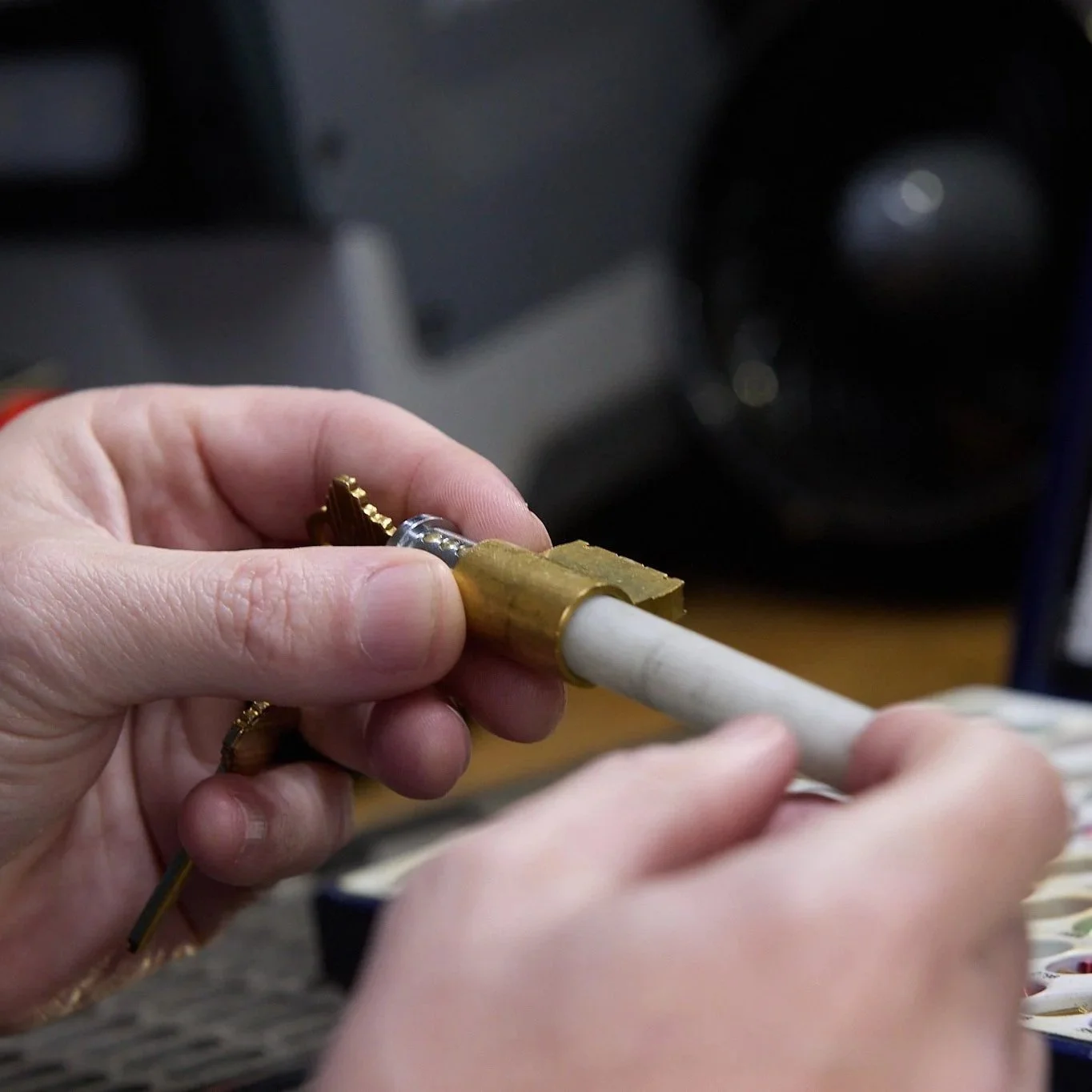
Technician examines worn file cabinet cam lock, illustrating common causes of jamming, misalignment, and mechanical stress during office use daily.
Common Reasons File Cabinet Locks Jam Or Fail
Most file cabinet lock failures trace back to gradual mechanical stress. Keys used multiple times a day wear down internal pins and wafers. Drawers loaded with heavy files sag slightly over time, putting pressure on the locking cam or plunger mechanism. Even small shifts in alignment affect how smoothly the lock operates.
Dust and debris also contribute to failure. Paper fibers, dirt, and office debris accumulate in the lock cylinder over time. Unlike exterior locks, file cabinet locks rarely receive cleaning or lubrication, which allows friction to increase unnoticed. As resistance grows, users apply more force, accelerating wear and increasing the chance of breakage.
Poor-quality locks fail faster than most people expect. Many cabinets ship with basic cam locks designed for light duty. In busy offices, those locks are used far more than intended. Over time, thin metal components bend, springs weaken, and tolerances widen. When the lock finally jams or breaks, it often surprises users who assumed the cabinet itself was still in good condition.
Recognizing Early Warning Signs Before A Lock Fully Fails
File cabinet locks usually give warning signs before complete failure. Keys begin sticking during insertion or removal. Turning the key requires extra pressure. The drawer opens only when pulled at a certain angle. These behaviors indicate internal resistance or misalignment that should be addressed early.
Another common sign involves inconsistent locking. A drawer may lock sometimes but not others, or the key may turn without fully engaging the locking mechanism. That behavior suggests the cam or plunger is slipping, often due to wear or loose mounting hardware.
Ignoring these signs increases the risk of sudden failure. When a lock finally jams completely, users often resort to force, bending drawer rails or damaging the cabinet body. Early attention to both the lock and the cabinet helps preserve them while minimizing downtime and frustration.
Diagnosing A Jammed File Cabinet Lock
Proper diagnosis starts with understanding what type of lock the cabinet uses. Single-drawer cam locks behave differently from plunger locks that secure multiple drawers at once. Combination and electronic locks introduce additional failure points beyond mechanical wear.
For keyed cam locks, diagnosis begins with checking the key condition. Worn or bent keys can cause many issues that appear to be lock failure. Trying a spare key often reveals whether the problem lies with the key or the cylinder itself. If multiple keys behave the same way, internal wear or debris is likely the cause.
Plunger locks require inspection of drawer alignment. If drawers sag or rails shift, the locking bar may bind even when the cylinder turns correctly. In those cases, the lock itself may be functional while the cabinet structure causes the jam. Identifying that distinction prevents unnecessary lock replacement when a structural adjustment solves the issue.
Safely Opening A Jammed File Cabinet Without Damage
When a file cabinet lock jams shut, the priority becomes restoring access without damaging the cabinet or compromising security, and forcing drawers open risks bending frames, breaking rails, or destroying documents inside. Controlled methods protect both the cabinet and its contents.
Light lubrication sometimes resolves minor jams. A dry graphite lubricant or lock-specific spray reduces friction without attracting debris. Spraying household oils into the lock often worsens the problem by trapping dust, so proper products matter.
Gentle manipulation helps diagnose resistance points. Applying slight upward or downward pressure to the drawer while turning the key can relieve tension caused by sagging. That technique often works for plunger locks affected by misalignment. If resistance persists, professional tools and experience prevent escalation into destructive entry methods.
Replacing A Broken Cam Lock
Cam lock replacement represents one of the most common file cabinet repairs. Once the drawer opens, replacing the lock typically involves removing a retaining nut or clip, sliding out the old cylinder, and installing a new one. The process appears simple, but choosing the correct replacement matters.
Cam length, rotation direction, and cam shape must match the cabinet design. Incorrect components cause drawers to lock improperly or to interfere with adjacent drawers. Measuring the old cam and cylinder ensures compatibility.
High-quality replacement locks offer thicker cams, better tolerances, and smoother operation than original equipment in many cabinets. Upgrading during replacement improves longevity and reduces the likelihood of repeat failures. Key control options also allow businesses to limit unauthorized duplication in the future.
Repairing Or Replacing Plunger Lock Systems
Plunger locks secure multiple drawers through a central vertical bar. When these systems fail, access to the entire cabinet becomes restricted. Repair involves addressing both the lock cylinder and the internal bar mechanism.
Common plunger lock failures include bent bars, worn linkages, and loose mounting points. Simply replacing the cylinder may not solve the problem if internal components bind. Proper repair involves realigning or replacing damaged parts and verifying smooth movement through the full locking range.
Replacement plunger lock kits often provide improved materials and tighter tolerances. Installing a new system restores uniform locking across drawers and eliminates intermittent issues caused by wear. Careful adjustment confirms drawers slide freely without compromising security.
Dealing With Broken Keys Stuck In File Cabinet Locks
Broken keys inside file cabinet locks create immediate access problems. Keys typically snap due to metal fatigue combined with resistance inside the lock. Removing the broken fragment without damaging the cylinder requires patience and the right tools.
Extraction tools grip the broken piece and slide it out gently. Improvised methods often push the fragment deeper, complicating removal. Once extracted, the lock should be evaluated before reuse. Continuing to use a lock that caused a key to break often leads to repeated failures.
Replacing the lock after a broken key incident usually proves wise. Internal wear that caused the break remains even after fragment removal. New locks restore smooth operation and reduce stress on replacement keys.
Electronic And Combination Lock Failures
Electronic and combination file cabinet locks introduce different failure patterns. Battery depletion, keypad wear, and electronic glitches prevent unlocking even when mechanical components remain intact. Diagnosing these issues starts with power checks and the manufacturer's recommended reset procedures.
Combination locks may fail due to worn dials or internal clutch mechanisms. Users often misinterpret these failures as forgotten codes, delaying repair. Resetting combinations or replacing worn components restores access without replacing the entire cabinet.
Electronic lock replacement often involves retrofitting new hardware rather than repairing internal electronics. Choosing compatible replacements secures a proper fit and avoids drilling or cabinet modification.
When To Repair Versus When To Replace
Deciding between repair and replacement depends on several factors. Lock age, frequency of use, cabinet condition, and security requirements all influence the decision. Minor jams caused by debris or alignment issues often respond well to repair.
Repeated failures, broken keys, or extensive internal wear suggest replacement makes more sense. Continually repairing low-quality locks often costs more in downtime and frustration than installing a better unit once.
Replacement also offers an opportunity to upgrade security. Restricted keyways, improved materials, or electronic options enhance control without replacing the entire cabinet. Viewing replacement as an upgrade rather than a failure reframes the decision productively.
Preventing Future File Cabinet Lock Problems
Prevention begins with routine attention. Periodic lubrication with appropriate products reduces friction and wear. Inspecting drawer alignment catches sagging before it stresses the lock mechanism. Training staff to avoid forcing keys or drawers prevents damage caused by misuse.
Key management matters as well. Bent or worn keys should be replaced promptly. Using original keys rather than copies reduces tolerance issues that accelerate wear. For electronic systems, battery replacement schedules prevent unexpected lockouts.
Choosing quality hardware from the start dramatically reduces failure rates. Commercial-grade locks withstand higher use and provide smoother operation. Investing upfront pays dividends in reduced maintenance and fewer disruptions.
Security Implications Of Broken File Cabinet Locks
A broken file cabinet lock represents more than an inconvenience. It exposes sensitive documents to unauthorized access during the failure period. Temporary measures such as leaving drawers unlocked or propped open undermine security policies and compliance obligations.
Prompt repair restores control and demonstrates responsible document management. Businesses handling personal, financial, or regulated information benefit from treating cabinet lock issues as security events rather than maintenance annoyances.
Repair decisions should always consider whether the lock still meets current security needs. Fixing a weak lock restores function but may not provide adequate protection going forward. Upgrading during repair strengthens security posture without additional disruption.
Coordinating Repairs With Office Workflow
Fixing file cabinet locks requires coordination to minimize disruption. Scheduling repairs during low-traffic periods prevents interruptions in access. Communicating clearly with staff helps avoid confusion about temporary restrictions.
Professional locksmiths experienced with office environments work efficiently and discreetly. They protect documents during repairs and make sure that cabinets return to service quickly. Attempting repairs without proper tools often prolongs downtime rather than shortening it.
Planning reduces urgency. Addressing early warning signs allows repairs to be completed on schedule rather than during crises, when access is urgently needed.
File Cabinet Lock Repair & Replacement FAQs
Why does my file cabinet key turn but not unlock the drawer?
A key turning without unlocking often indicates a worn or bent cam, loose mounting hardware, or drawer misalignment preventing proper engagement. An inspection determines whether adjustment or replacement is needed.
Can a jammed file cabinet lock be fixed without replacing it?
Minor jams caused by debris or misalignment can often be corrected through cleaning, lubrication, or adjustment. Locks with internal wear or damage usually require replacement.
Is it safe to force open a locked file cabinet?
Forcing drawers open often damages the cabinet and documents inside. Controlled unlocking methods or professional assistance prevent unnecessary damage.
How long does it take to replace a file cabinet lock?
Most cam lock replacements take only minutes once the drawer is open. Plunger or electronic locking systems may take longer depending on complexity.
Should file cabinet locks be upgraded during repair?
Upgrading during repair often improves durability and security. Replacing low-quality locks with commercial-grade options reduces future failures and improves access control.
Locksmiths of Kansas City provides a complete, one-stop solution for professional mobile locksmith, safe & specialty locksmith, and security & access solutions, including home lock upgrades, business access system installation, safe servicing, and Emergency locksmith response. Our trusted and experienced team serves residential and commercial clients with a focus on safety, reliability, and long-lasting results. We deliver 100% satisfaction guarantee and quality workmanship. Request your locksmith service today and enjoy peace of mind and secure premises.
